By Pamela Hogle, Learning Solutions Magazine. January 31st 2022
What seems to be lost on many managers is that, by definition, to be successful, their team needs to be successful. This means their role is to provide their team with the resources, training, and support to be successful. This article (which includes advice for L&D Managers), which first appeared in Learning Solutions Magazine on the 18th January 2022, provides a great summary of what ‘Servant Leadership’ is. Click here to go to the original source with full links.
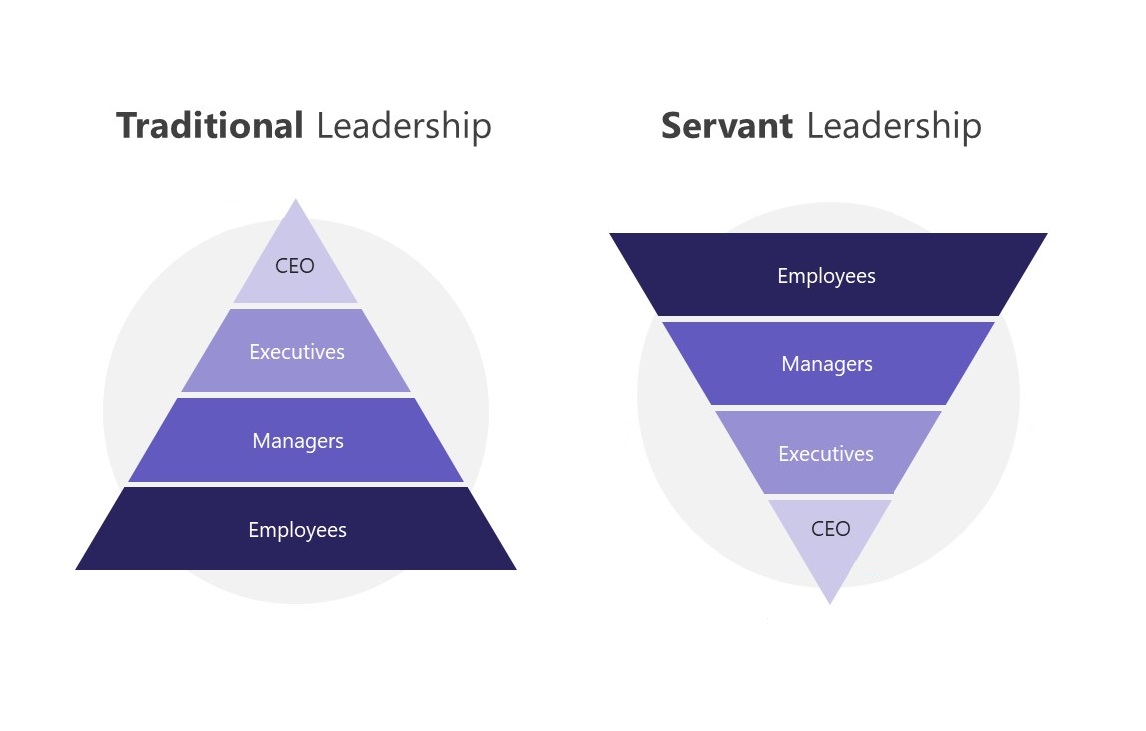 The nature of leadership is changing as employees demand greater autonomy and flexibility, expecting—and requiring—the ability to better balance and integrate life and work priorities and needs. A buzzy term that describes some elements of the emerging leadership paradigm is “servant leadership.”
This view of leadership emphasizes empathy, compassion, and authority; it encompasses a view of the leader’s role that is almost a 180-degree turn from conventional or traditional notions of leadership rooted in hierarchy and power.
The term, coined by Robert K. Greenleaf, refers to a leader whose inclination to serve is primary—rather than their aspiration to lead. “The difference manifests itself in the care taken by the servant—first to make sure that other people’s highest priority needs are being served. The best test, and difficult to administer, is: Do those served grow as persons?” Greenleaf wrote in “The Servant as Leader,” his 1970 essay. Greenleaf contrasts the service-based approach with “traditional leadership,” which “generally involves the accumulation and exercise of power by one at the ‘top of the pyramid.’”
In a business context, the servant leader prioritizes employees’ growth and development. Servant leadership emphasizes vision, direction, and goals, according to leadership expert Ken Blanchard.

Characteristics of servant leadership
A key reason that servant leadership is enjoying a moment in the spotlight is its emphasis on empathy, which requires that leaders listen to and care about the people they are leading. Servant leaders ask how people are doing—and not just how they’re progressing on work assignments. These leaders’ openness to addressing the “whole person” moves the employee-manager away from a primarily transactional relationship.
A servant leader strives to provide a work environment that offers safety—not only physical safety but also emotional and psychological safety. Such a workplace is inclusive and equitable, and employees feel empowered to share their thoughts, ideas, and opinions without worry about being judged or punished for differing from the manager or their colleagues.
Servant leaders also embody characteristics that commonly appear in descriptions of any successful business leader: They are clear in their communications and expectations. They are transparent and exhibit integrity. Servant leaders are self-aware and care about how team members perceive them.
Recognising servant leadership
Workers who experience servant leadership find that their managers focus on productivity and results, rather than on enforcing rules or monitoring workers. They lead with authority rather than exercising power.
Servant leaders ensure that workers feel safe experimenting and trying stretch assignments because errors or failures are treated as learning opportunities rather than being punished. They offer flexibility and strive to reduce workers’ stress and find creative solutions to problems. Their bottom line is providing the support that their team members need to succeed and grow.
Servant leaders don’t neglect the fundamentals
Elements of conventional leadership are essential, of course, to successful business leadership. Servant leaders do need to pay attention to the basics, such as ensuring that business goals are met, employees remain productive, customers receive quality products and outstanding service, and the bottom line continues to improve. But those are not the only results that matter, and servant leadership seeks to balance these goals with employees’ needs, recognizing that outside priorities may preempt work demands at times.
Servant leadership tempers an authoritarian approach with a personal relationship; these leaders may be more likely to provide coaching or mentorship than a more rules-and-results-focused manager, for example. A servant leader will get to know their team members in ways that enable them to map out a personal development path for each employee. And servant leaders provide the space and an environment where employees can learn, grow, and develop, rather than micromanaging them.
How learning leaders can practice servant leadership
Servant leadership comes naturally to many learning leaders, possibly as a result of their affinity with guiding and planning professional and personal development paths for others. Certainly within their own teams, learning leaders have ample opportunity to exercise servant leadership, ensuring that team members grow and develop and receive the support they need to excel. Learning leaders can also influence leaders across the organization. Learning leaders may be well positioned to collaborate with other leaders as well as to encourage and facilitate the use of collaboration tools company wide, for example.
Nurturing cross-departmental relationships and leading by example are two ways way any leader can demonstrate and extend a servant leadership approach throughout the organization. Developing leadership training materials and programs that emphasize flexibility, fostering creativity and problem-solving, supporting the notion of ‘productive failure,’ and creating coaching or mentoring programs are additional ways that learning leaders can extend the reach of servant-based leadership.

ADD YOUR COMMENTS – We’d love to hear your thoughts on this article. Please add them in the comments section below.
FOLLOW FOR FREE – To receive the free ‘Learning Matters’ daily news via email, simply click on the ‘Follow’ button on the right of the screen – your details are kept in confidence and you can unsubscribe anytime.
ARTICLE WRITERS NEEDED – Do you have something you’d like to contribute to Learning Matters? If so, we’d love to hear from you. Please email us at AustralianLDN@yahoo.com.au


 Learning Matters - The Australian Learning & Development Network Magazine